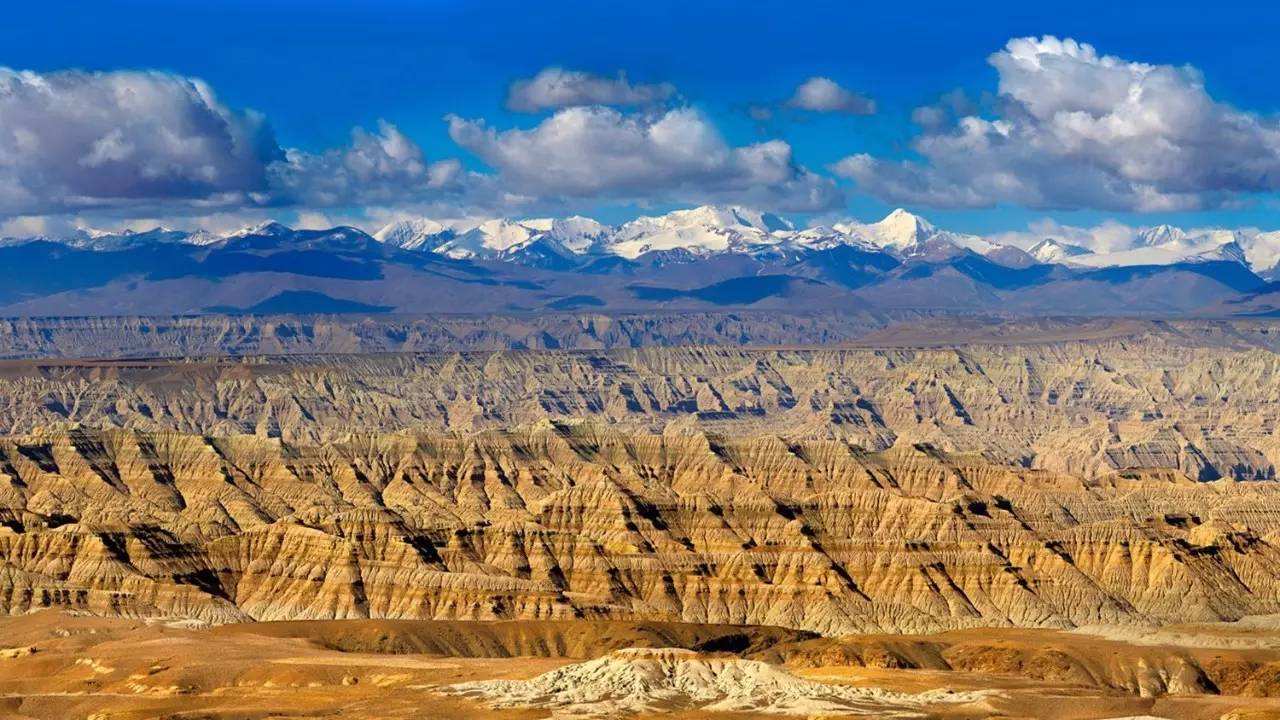
Overview of Guge Kingdom
At different time points in history after the 10th century AD, Guge kingdom conquered a vast area including the south-eastern Zanskar, Upper Kinnaur district, and Spiti Valley. The ruins of the former capital of the Guge kingdom are located at Tsaparang in the Sutlej valley, not far from Mount Kailash and 1,200 miles (1,900 km) westwards from Lhasa.
Tsaparang is 18km west of Zanda, while Tholing Monastery is now merely an adjunct to the town. To visit both, you need to budget at least three days (two solely for getting there and back from Darchen). Both sites are in the valley of the Langchen Tsangpo (Sutlej River), the ‘elephant river,’ which rises west of Mansarovar and continues over the border with India into Ladakh and finally Pakistan.
The History of Guge Kingdom
Guge Kingdom was established by the descendants of the Tubo royal family in the present Nagri region. It was not only the continuation of the Tubo’s ancestry, but also enabled Buddhism to regain its foothold after the collapse of the Tubo, and gradually reached its full height. Therefore, Guge Kingdom is of great significance in Tibetan history.
By the 10th century, the Guge Kingdom was already a wealthy trade center supporting several thousand people when the great Guge King Yeshe O began to nurture an exchange of ideas between India and Tibet. The young monk Rinchen Zangpo (958-1055) was sent to study in India and returned 17 years later to become one of Tibet’s most excellent translators of Sanskrit texts and a key figure in the revival of Buddhism across the Tibetan plateau. Rinchen Zangpo built 108 monasteries throughout western Tibet, Ladakh, and Spiti, including the great monasteries of Tabo and Alchi. Two of the most important were those at Tsaparang and Tholing. He also invited Kashmiri artists to paint the unique murals still visible today. It was partly at Rinchen Zangpp’s behest that Atisha, a renowned Bengali scholar and another pivotal character in the revival of Tibetan Buddhism, was invited to Tibet. Atisha spent three years in Tholing before traveling on to central Tibet.
The Guge Kingdom fell into ruin just 50 years after the first Europeans arrived in Tibet in 1624, after a siege by the Ladakhi army. The center of Tibet soon became the middle of nowhere.
The Unique Structure of Guge Kingdom
According to the structure of Guge Kingdom ruins, there are more than 300 houses, 400 temples, 28 stupas, 58 watchtowers, 4 tunnels, 11 granaries, and nearly 1000 caves. The superstructure is the royal palace, followed by the military office and guarded barracks. Next, some temples and finally there is the civilian residence. It also reflects the rigid hierarchy. Even in outlying areas, there are besieged city walls, towers at the four corners, some temples and palaces with exquisite fresco. The most surprising part is that one has to get through a palace gate at a tunnel to go to the top, which makes the palace easy to defend and difficult to attack.
How to Get to the Guge Kingdom?
The Guge Kingdom relics located in Zanda County, Ngari Prefecture, surrounded by a large scale of soil forest. Ngari is a very far away place, no matter you are getting there from Lhasa, Kathmandu, or anywhere else. Currently, there’re two ways, by road or by plane.
Driving to Ngari: Driving to Ngari from Lhasa is a popular way for most tourists as it’s a great sightseeing journey along the way. You will pass through many major tourist attractions in Tibet, like Yamdrok Lake, Karola Glacier, Gyantse, Shigatse, Mt.Everest, etc. By the way, it’s the most comfortable and cost-effective way to as you can adopt the ascending altitude gradually.
Flying to Ngari: Nowadays, it’s possible to take flights to Nagri for travelers with a tight time schedule. There are flights between Lhasa and Ngari with a duration of 2 hours. You can also travel from Urumqi to Ngari by flight with a stopover at Kashgar. The whole journey takes about 4 hours. After you arrive at Ngari Gunsa Airport, it takes about 5 hours driving to get to the Guge Kingdom relics. If you are departing from Kathmandu, you can fly to Lhasa first, then take another plane to Ngari.
 Tibet Travel